0min
Vehicle
FORD Transit MADRID, madrid
Auction Value 18.000,00 €
Status Active
Furgoneta de Color Blanco Modelo Ford Transit. Estado: Bueno no Tiene Llave Ni Documentacion.
The current volume of 2,288 assets in public auctions reveals extreme market fragmentation. With 80% of items classified as real estate, residential property leads the supply with 742 files, followed by urban plots. However, the gap between the average valuation (€131,097) and the median (€59,291) for real estate assets warns of strong asymmetry: there is a saturation of low-value assets while a few high-capital lots distort the statistics.
For investors, this poses a critical operational risk. It is common in these judicial auctions to see valuations that do not reflect the actual occupancy status or prior land registry charges, turning assets with apparent discounts exceeding 90% into potential liquidity traps. Geographical concentration in Madrid, Zaragoza, and Barcelona suggests higher activity, but also more aggressive bidding competition.
It is imperative not to confuse the starting bid with the actual market value. In similar operations, the lack of an updated land registry extract has led to the acquisition of assets with non-cancellable tax liens. Given this scenario of heterogeneity, individual analysis of the auction notice is more decisive than any macroeconomic trend.
Information analyzed using our proprietary subastAI advanced models. This does not constitute investment advice.
Furgoneta de Color Blanco Modelo Ford Transit. Estado: Bueno no Tiene Llave Ni Documentacion.
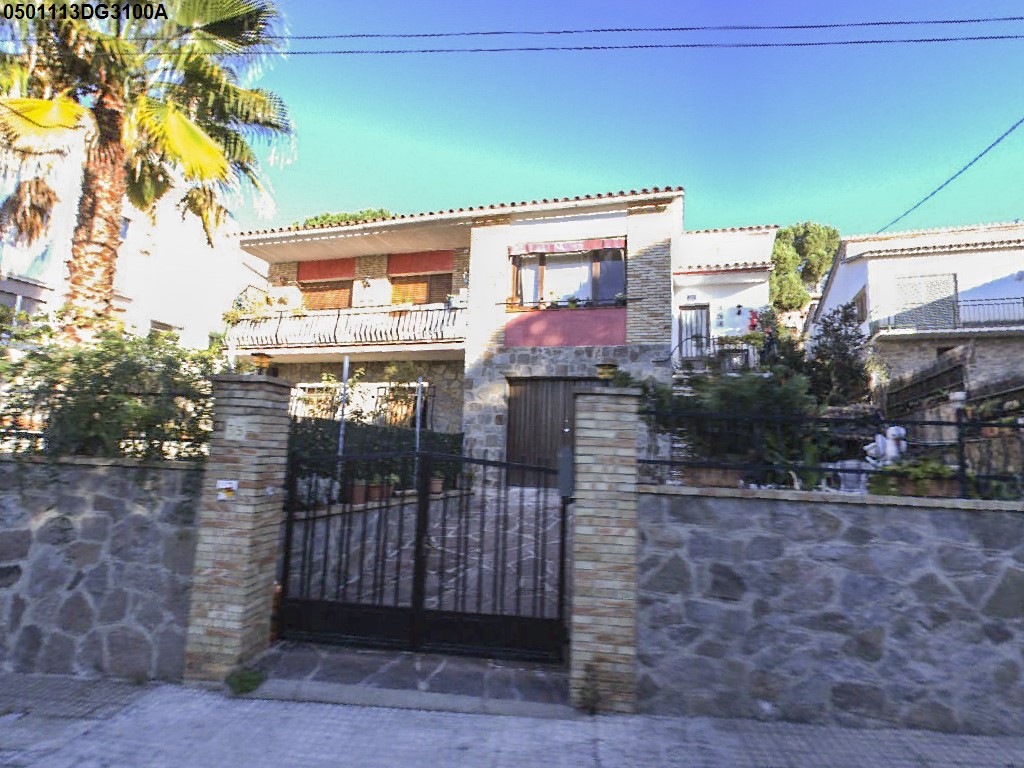
Urbana.- Edificio que Consta de Planta Baja, Destinada a Garaje de Cuarenta Metros Cuadrados y que Consta de Garaje y un Cuarto Lavadero-Trastero; Planta Piso Destinado a Vivienda de Noventa Metros Ochenta y Ocho Decímetros Cuadra Dos, Situado en la Calle Pompeu Fabra, Número 31 de Caldes de Montbui.
The term Public Auctions defines all forced sale and asset liquidation procedures carried out under the umbrella of state, regional, or local administrations, and open to participation by any citizen. Far from the opacity of the past, today all public auctions are centralized electronically, guaranteeing democratic and transparent access to high-caliber investment opportunities.
Buying in the private market involves dealing with inflation, real estate agency intermediation, and speculative overpricing. Conversely, public auctions allow access to the "original source" of seized assets. When acquiring apartments, industrial warehouses, or parcels directly through a public procedure, investors can benefit from starting prices that often contemplate discounts of up to 50% over the official market appraisal.
Digitalization has greatly simplified investment. To participate in any public auction in Spain, users only need a Digital Certificate or Cl@ve system, register on the Electronic Auction Portal, and make a preventive deposit, fixed by law at 5% of the appraisal value of the lot. This deposit acts as a solvency guarantee and filters out speculative bidders.
The fundamental legal principle of any public auction is that the asset is transmitted as "specific body" with "subsistence of charges." The public administration offers no guarantees about the physical state of the property, nor about whether there are squatters inside, nor does it assume prior debts (such as IBI or higher-ranking mortgages). So you don't invest blindly, the subastAI directory audits each public file. Our AI extracts registry charges, geolocates parcels by cross-referencing land registry data, and calculates your net profit margin, converting a complex public process into a predictable and safe investment.
The term Public Auctions defines all forced sale and asset liquidation procedures carried out under the umbrella of state, regional, or local administrations, and open to participation by any citizen. Far from the opacity of the past, today all public auctions are centralized electronically, guaranteeing democratic and transparent access to high-caliber investment opportunities.
Buying in the private market involves dealing with inflation, real estate agency intermediation, and speculative overpricing. Conversely, public auctions allow access to the "original source" of seized assets. When acquiring apartments, industrial warehouses, or parcels directly through a public procedure, investors can benefit from starting prices that often contemplate discounts of up to 50% over the official market appraisal.
Digitalization has greatly simplified investment. To participate in any public auction in Spain, users only need a Digital Certificate or Cl@ve system, register on the Electronic Auction Portal, and make a preventive deposit, fixed by law at 5% of the appraisal value of the lot. This deposit acts as a solvency guarantee and filters out speculative bidders.
The fundamental legal principle of any public auction is that the asset is transmitted as "specific body" with "subsistence of charges." The public administration offers no guarantees about the physical state of the property, nor about whether there are squatters inside, nor does it assume prior debts (such as IBI or higher-ranking mortgages). So you don't invest blindly, the subastAI directory audits each public file. Our AI extracts registry charges, geolocates parcels by cross-referencing land registry data, and calculates your net profit margin, converting a complex public process into a predictable and safe investment.
Edicts and Simple Notes. (Dense and unreadable texts).
Our AI extracts data and calculates real charges in seconds.
You know hidden risks and the exact bidding strategy.
Unlock legal risk indicators, occupancy, subsisting charges, opportunity margin and smart score.